ALICE’S ADVENTURES IN WONDERLAND
EDITORIAL PUBLICATION DESIGN
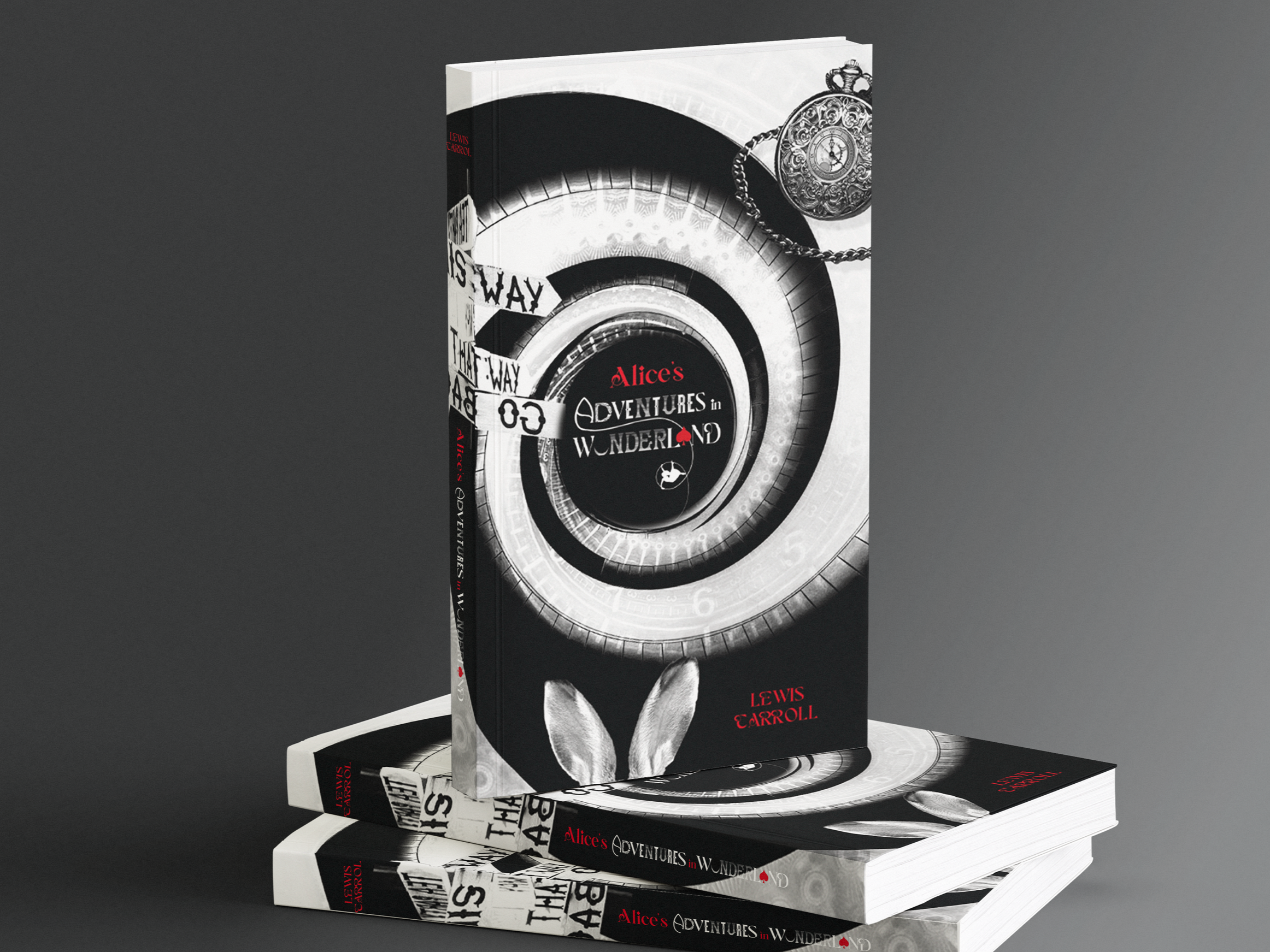
This project reimagines Alice’s Adventures in Wonderland as a limited-edition publication, translating the narrative into a contemporary visual interpretation tailored to a more mature audience. The design includes a custom book cover and a redesigned presentation of the novel’s first chapter.
While often regarded as a children’s story, this interpretation explores its deeper psychological and dramatic themes, including abandonment, denial, distorted realities, coming of age, and underlying social tensions. These ideas informed the visual direction of the project, shaping both the tone and overall design approach.
Additional themes such as the fluid nature of time, the tension between logic and absurdity, and the overlap between reality and dreams guided the conceptual framework. The communication goal, “the absurdity of dreams mirrors the logic of reality,” reflects Alice’s experience navigating a world that both mirrors and distorts real psychological challenges.
The design translates these themes through typography, layout, and imagery, creating a cohesive visual system that supports a more layered and interpretive reading of the story. The final result maintains the narrative’s sense of wonder while emphasizing its darker, more complex undertones for an adult audience.
Toronto Film School (Academic Project)
Concept Development
Typography Design
Illustration & imagery
Book Design
Book Cover Design
Client:
Deliverables:
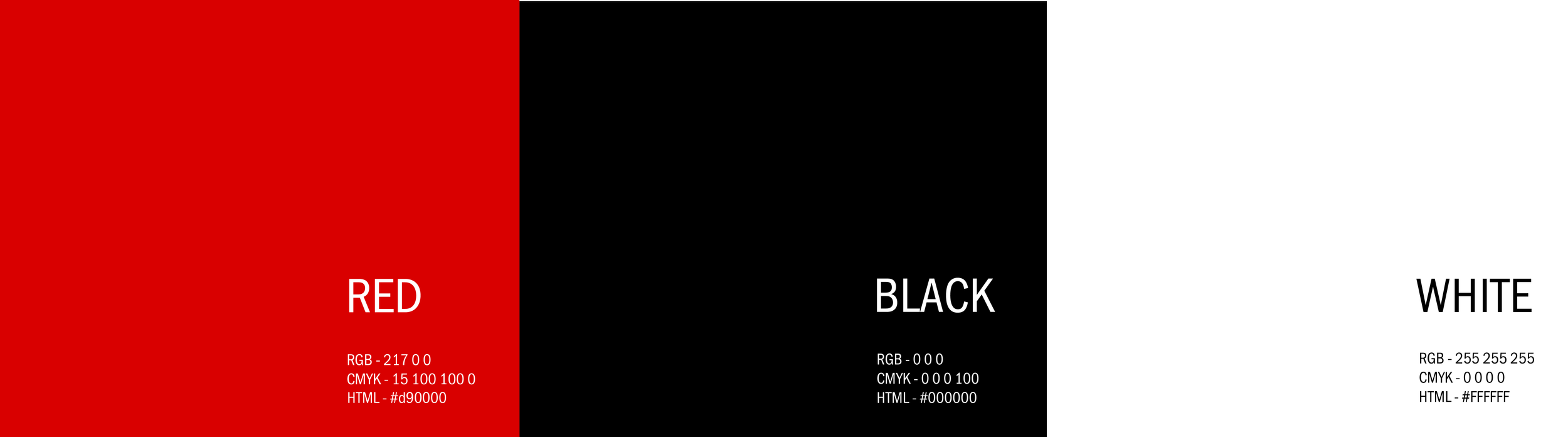
Colour Palette

Book Cover Title/ Typography

Typography
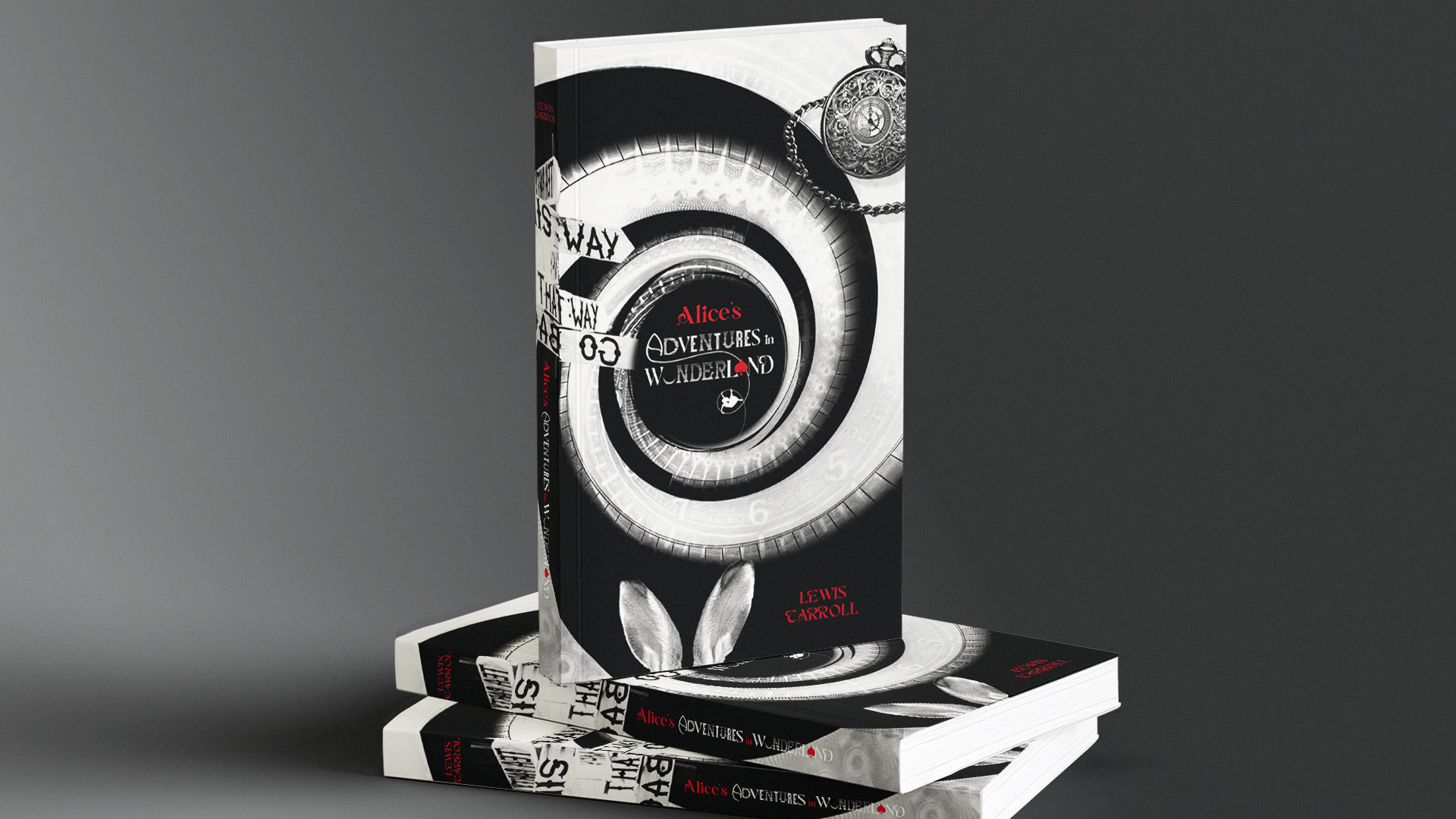
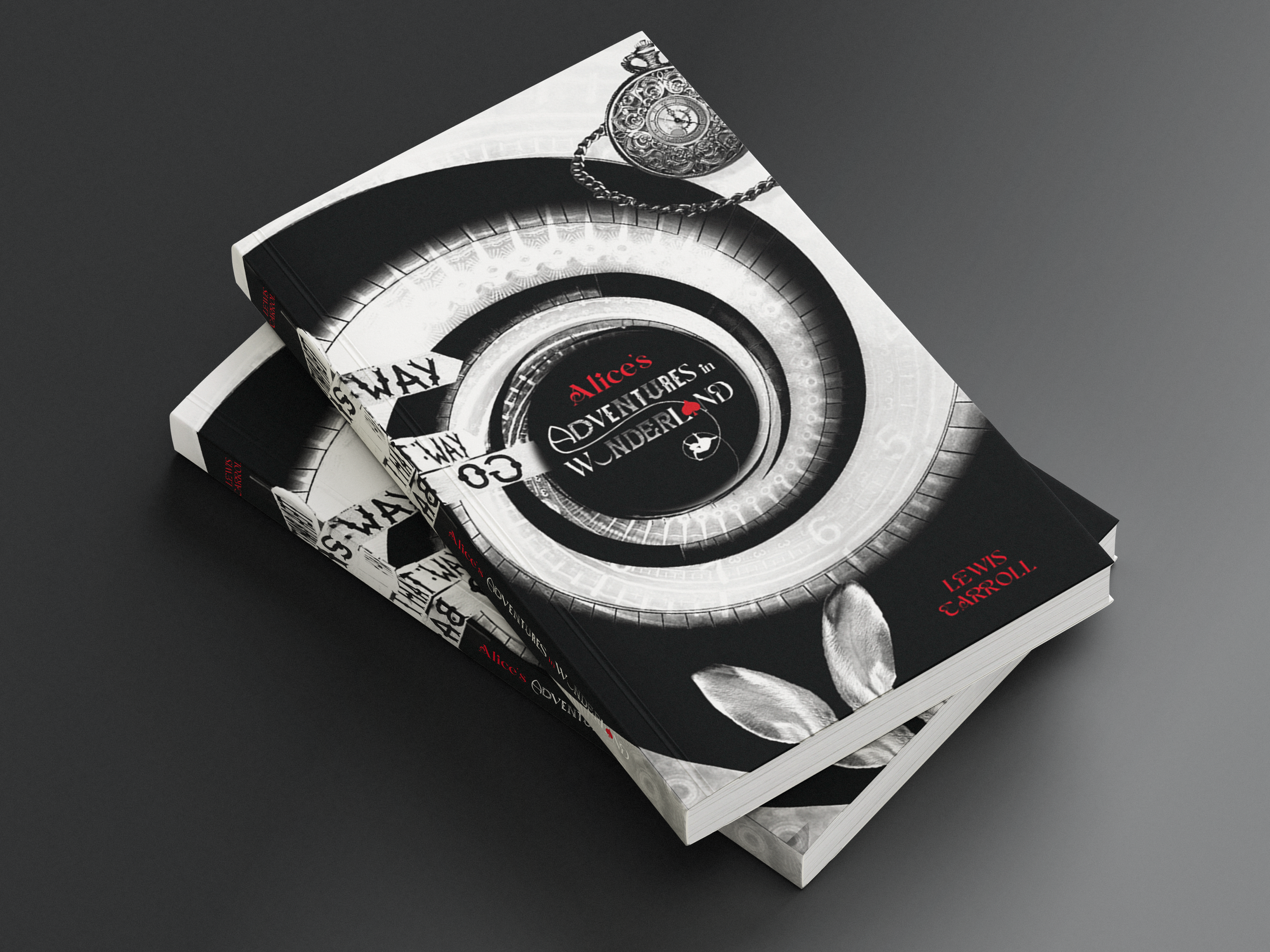
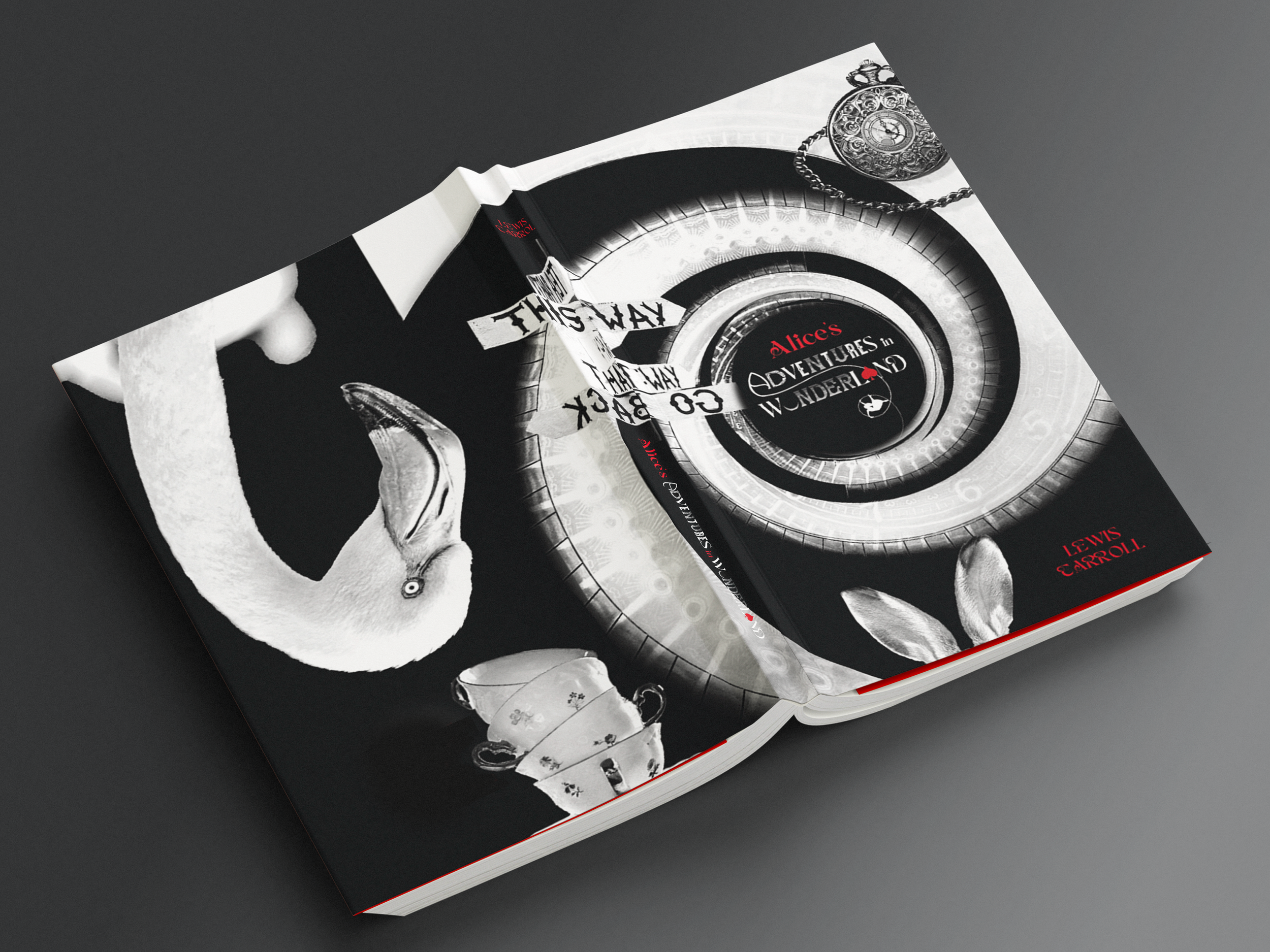
Book Cover Design
Concept featuring a continuous, full-wrap artwork layout spanning from the front cover to the back
Limited Edition - First Chapter
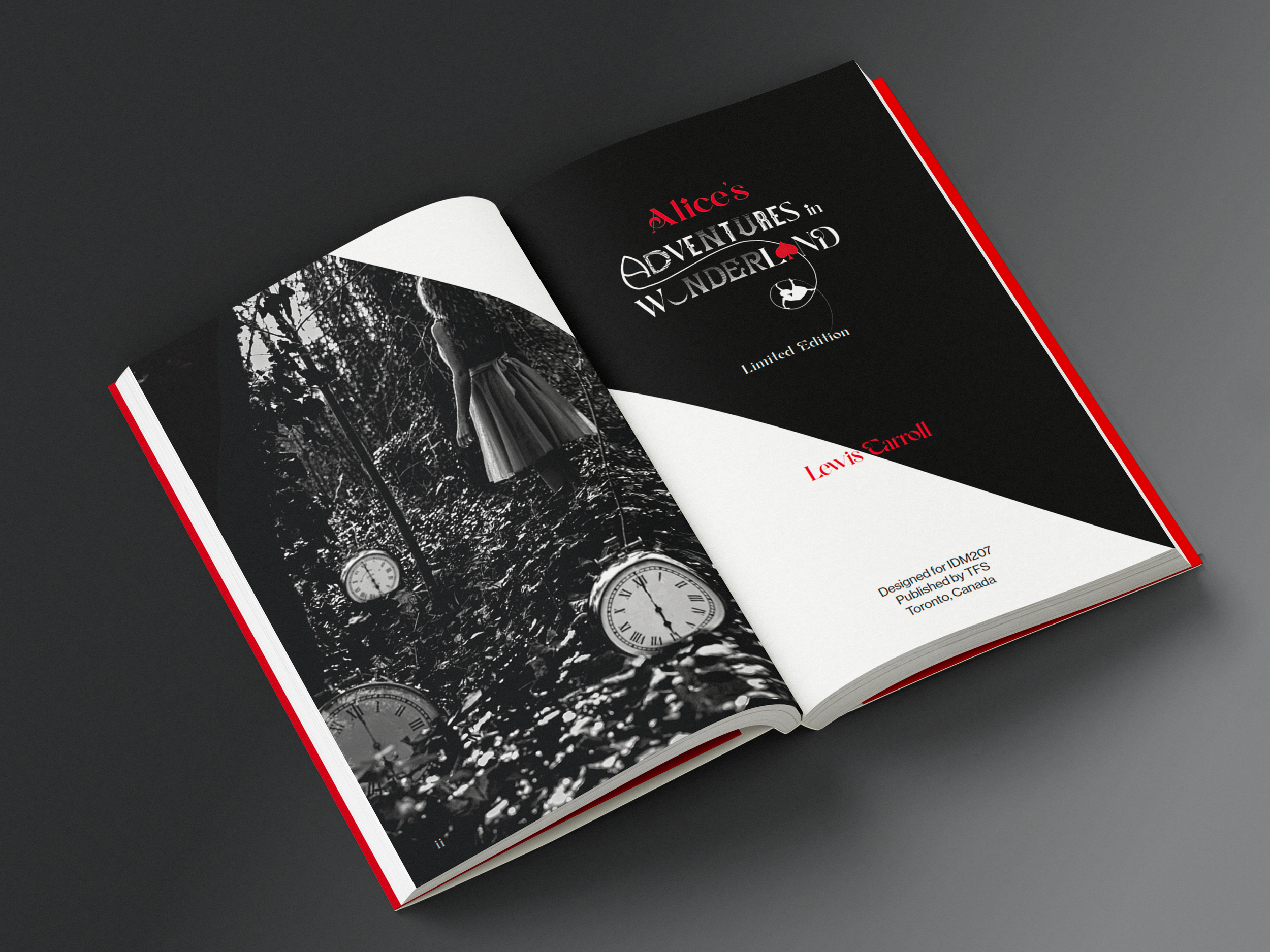
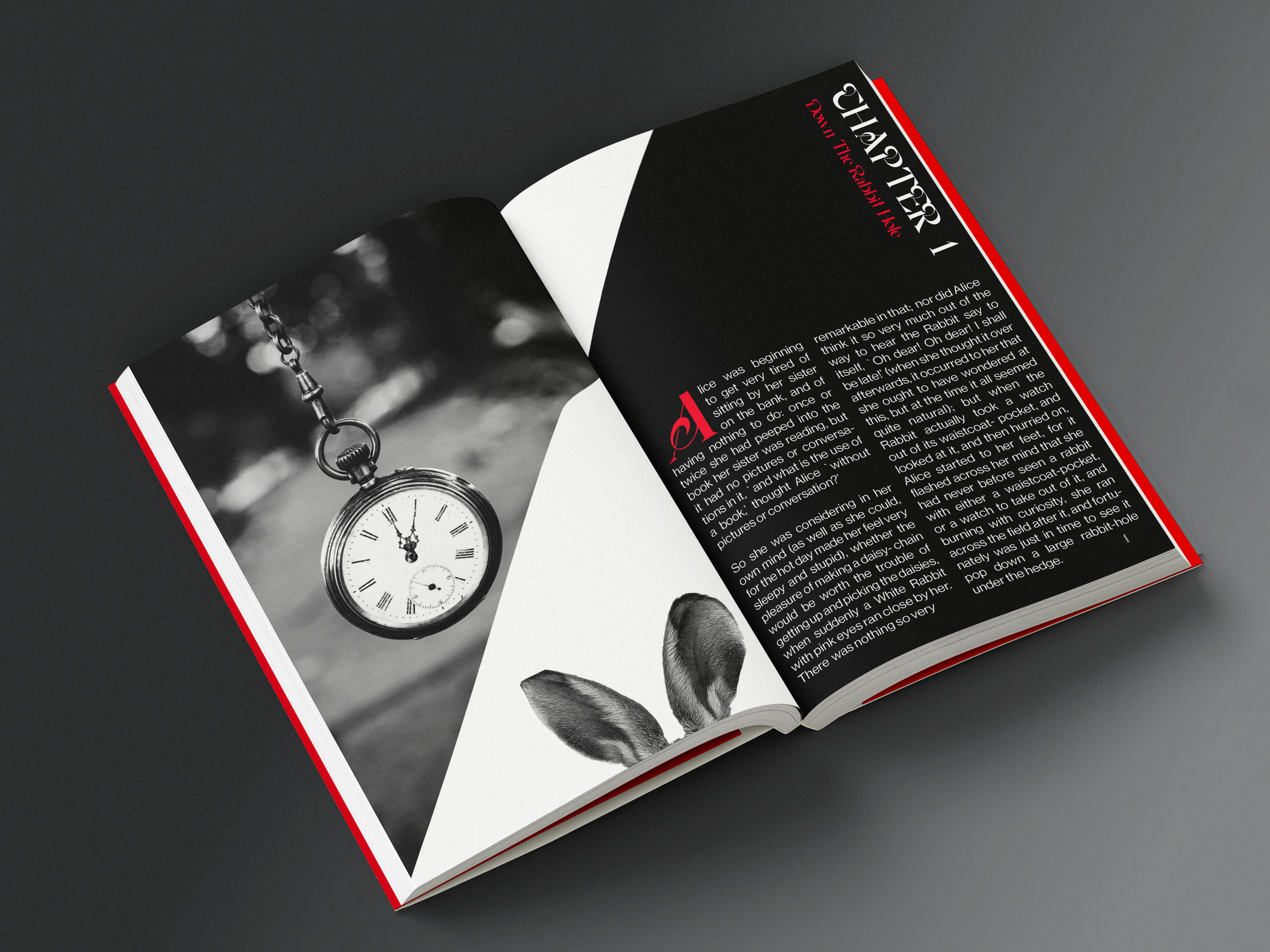
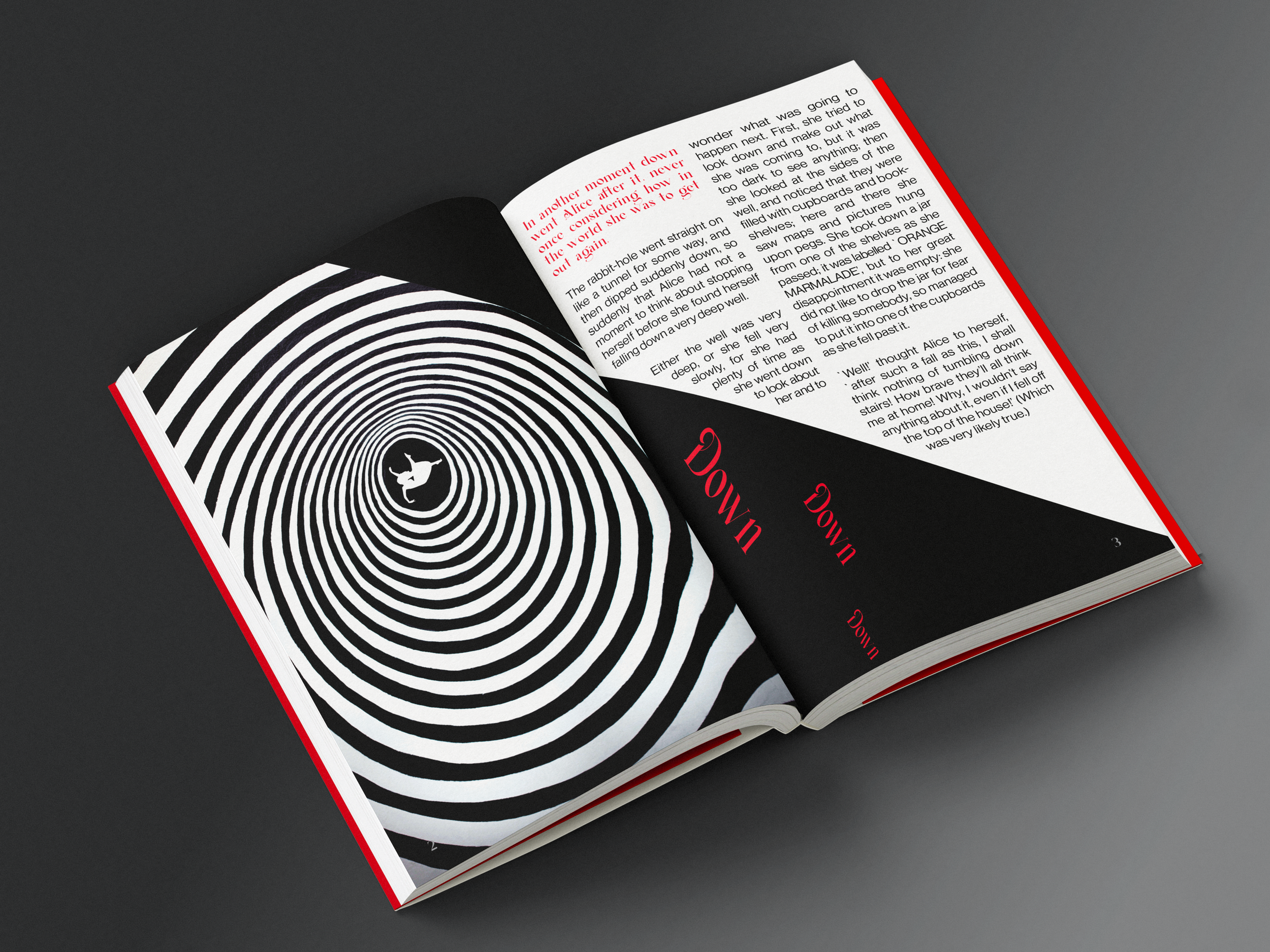
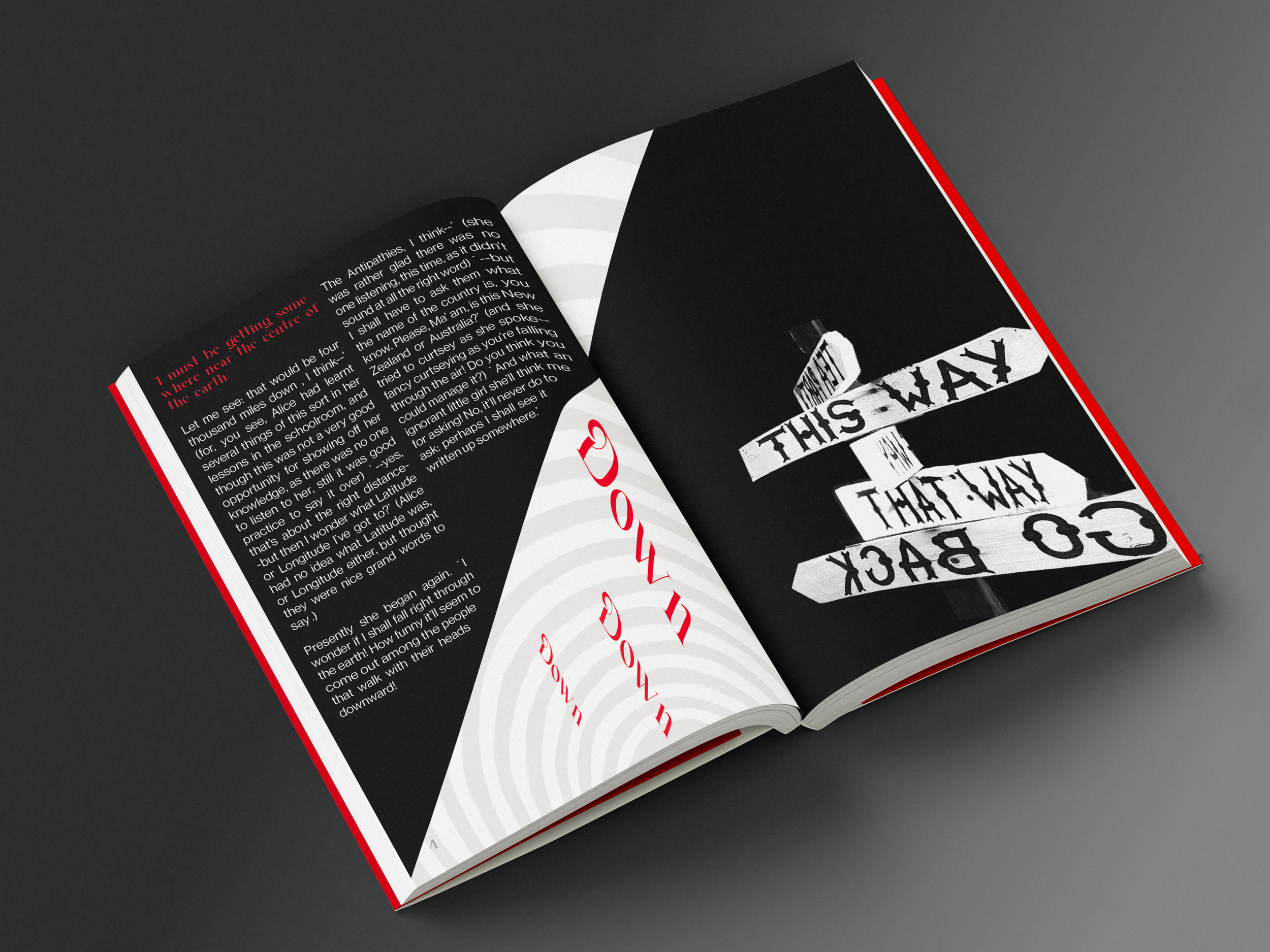
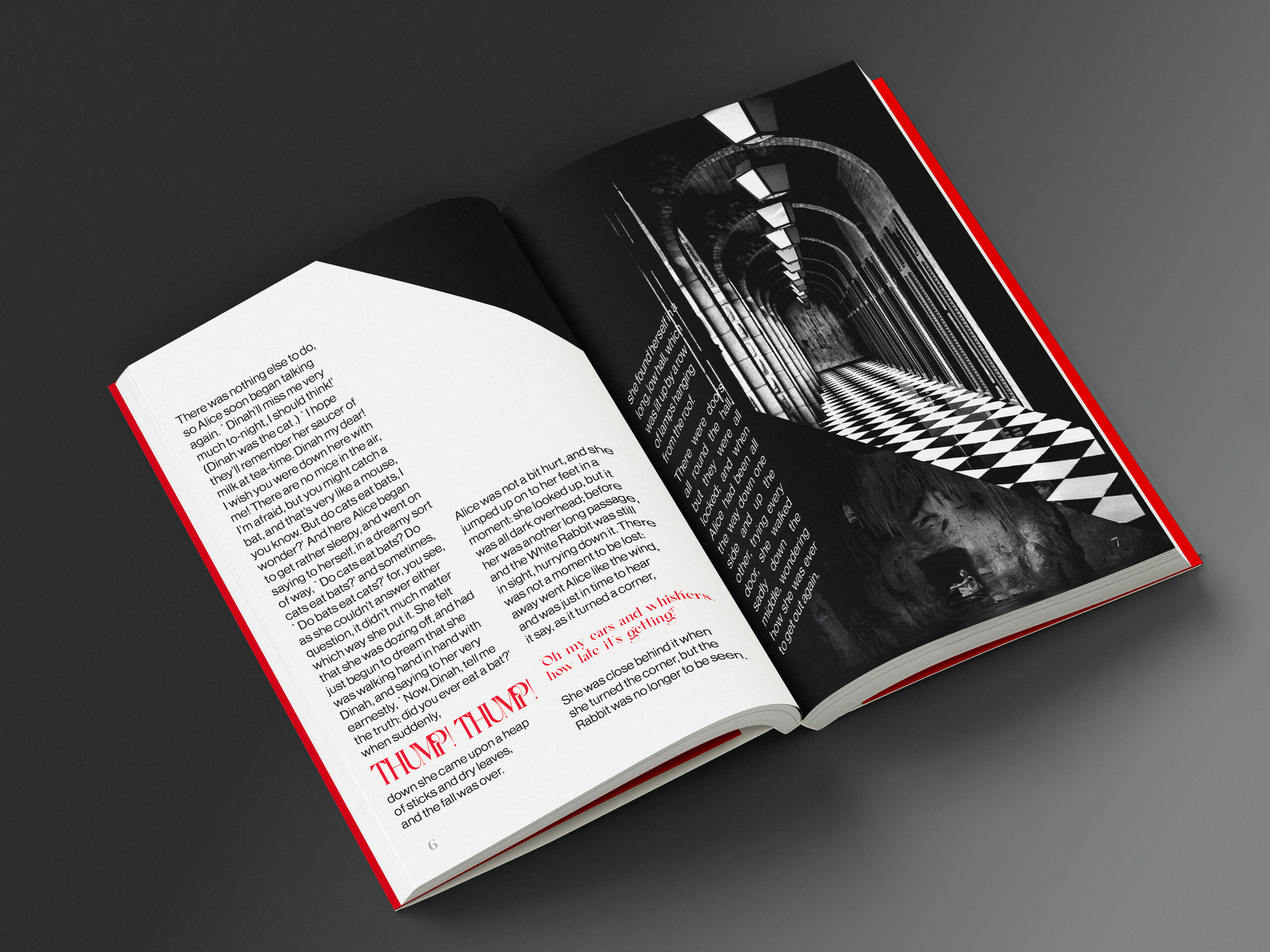
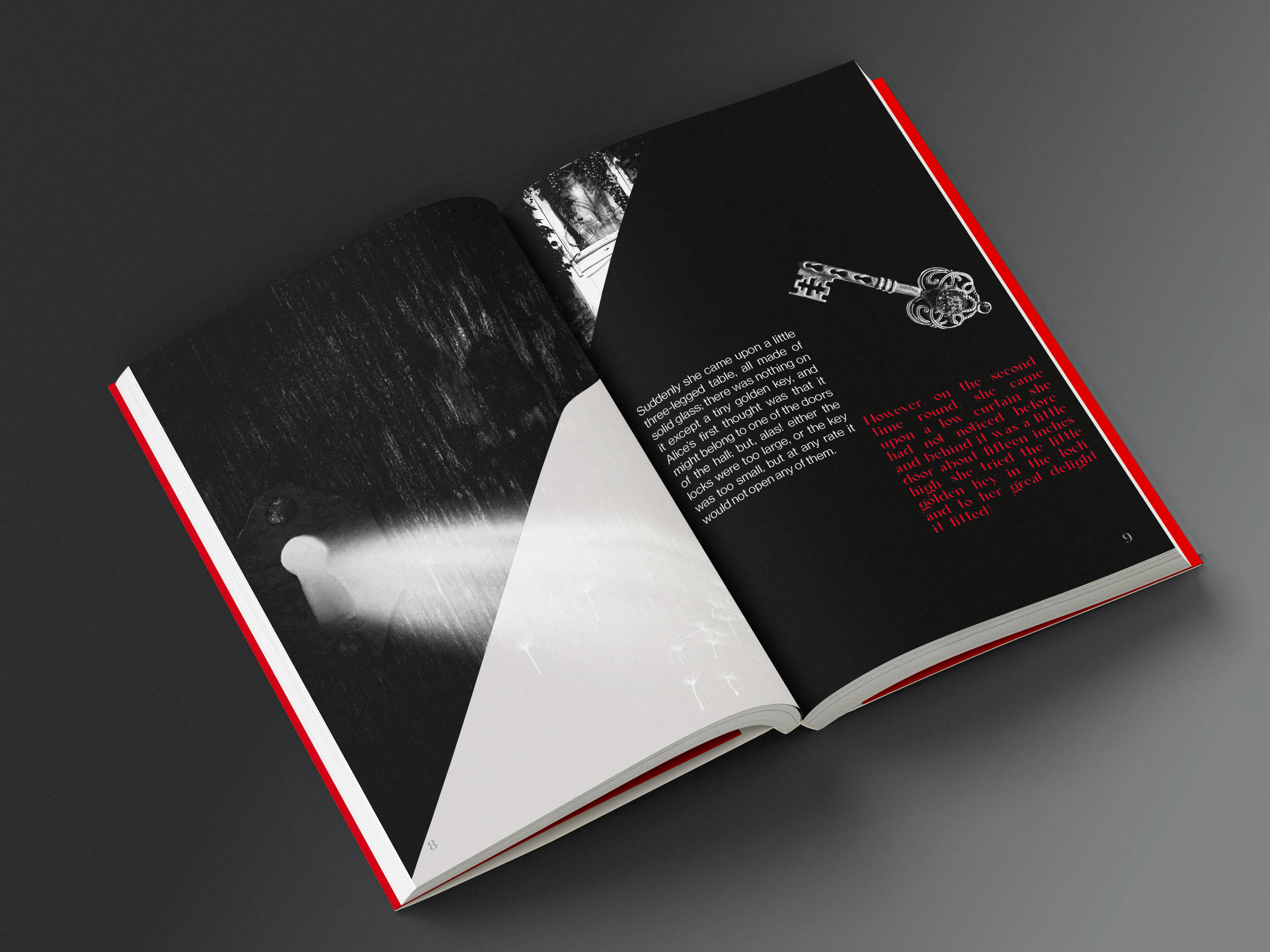
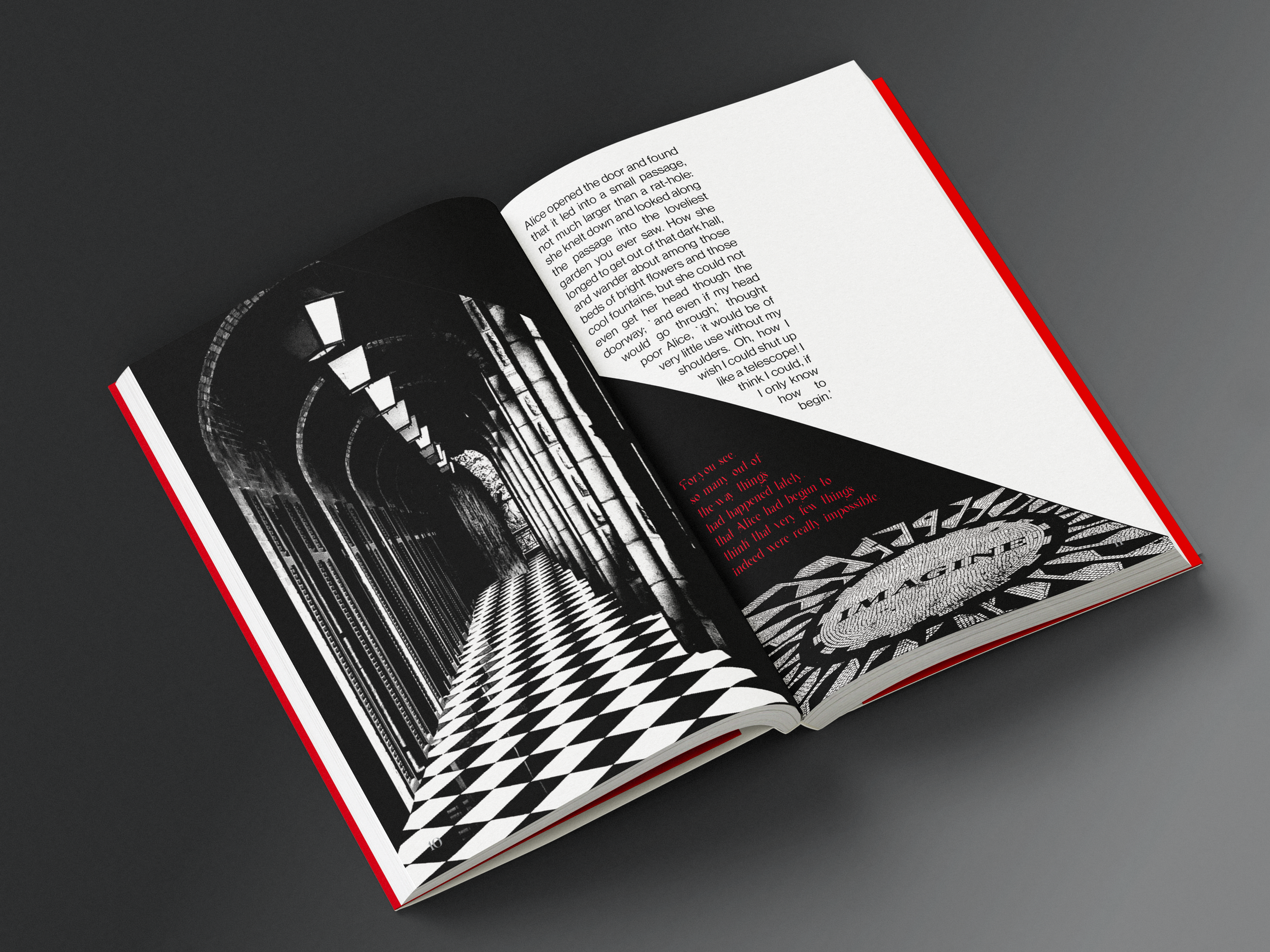
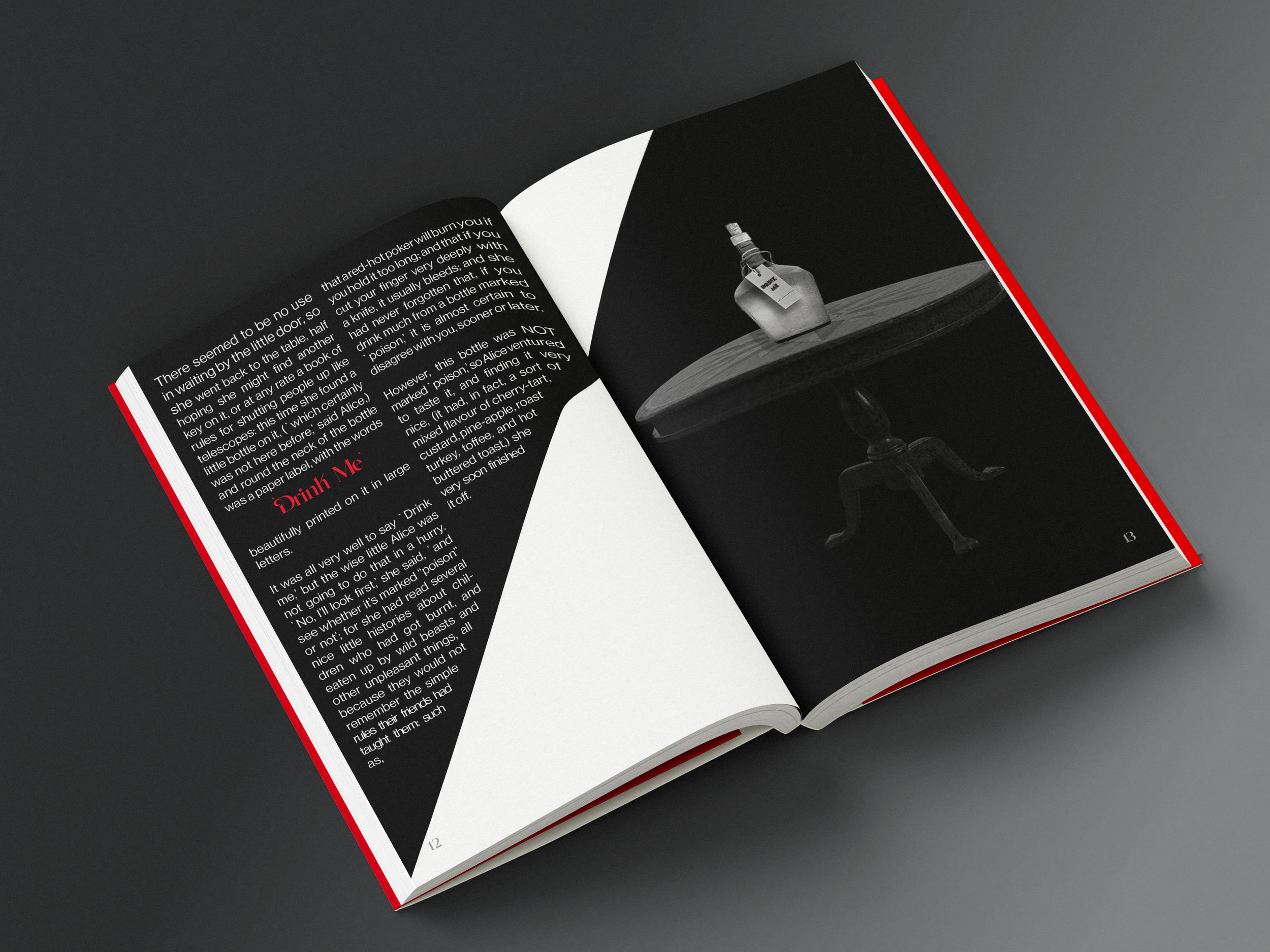
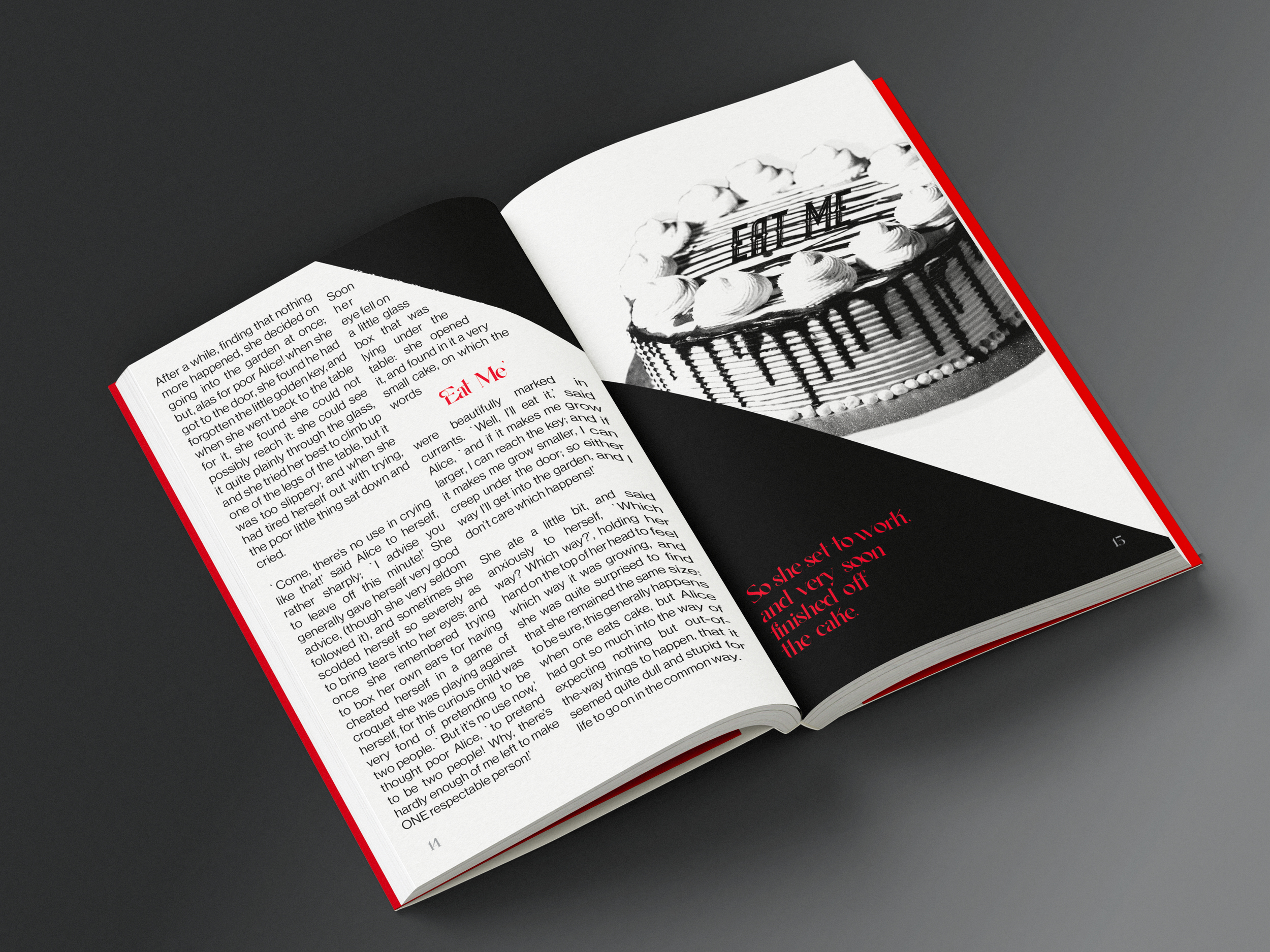
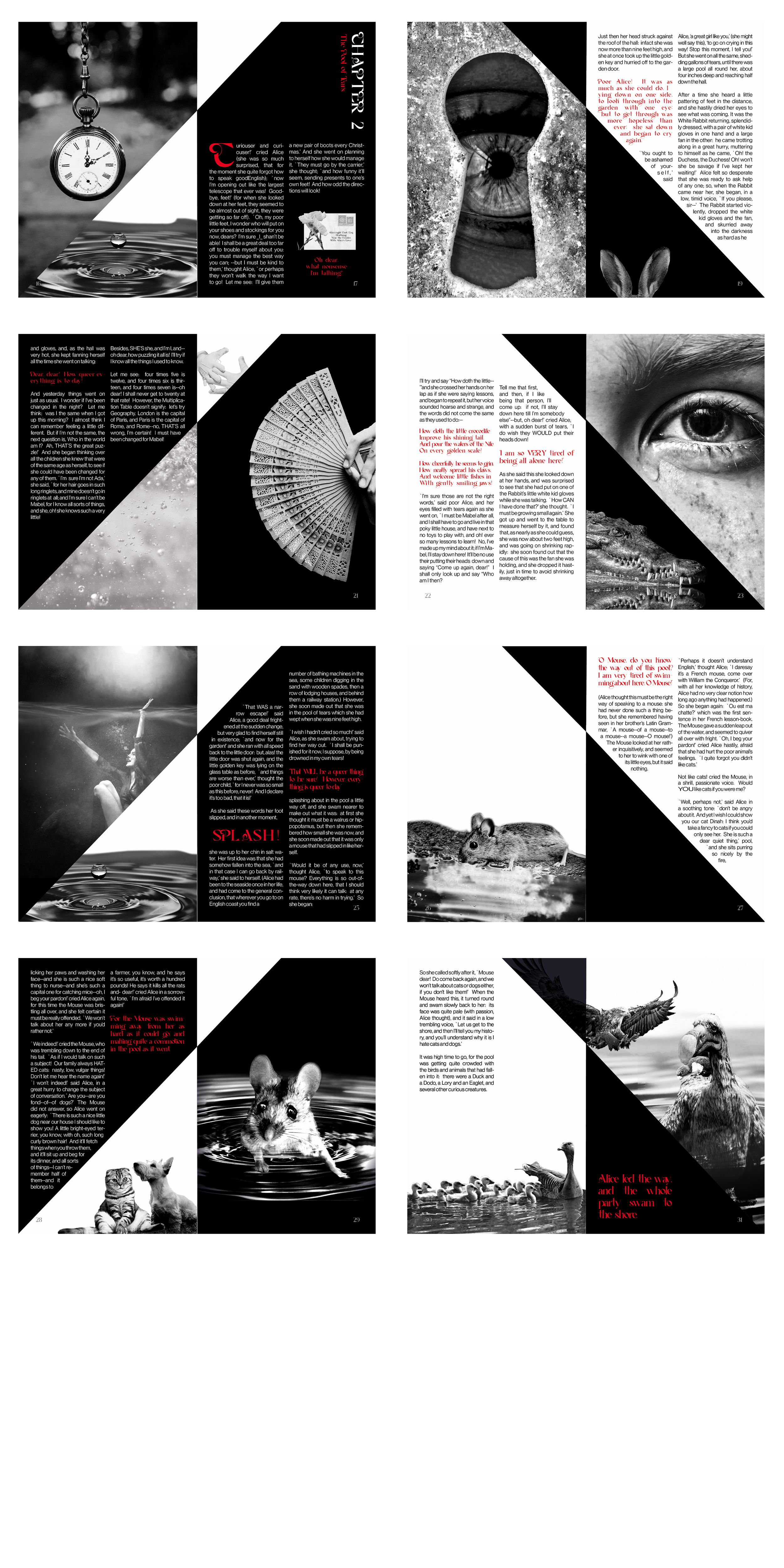
Chapter Spreads
The chapter system explores time, perception, and narrative fragmentation through structured layouts. Each spread is designed to reflect shifts in tone and perspective while maintaining a cohesive visual language across the book.
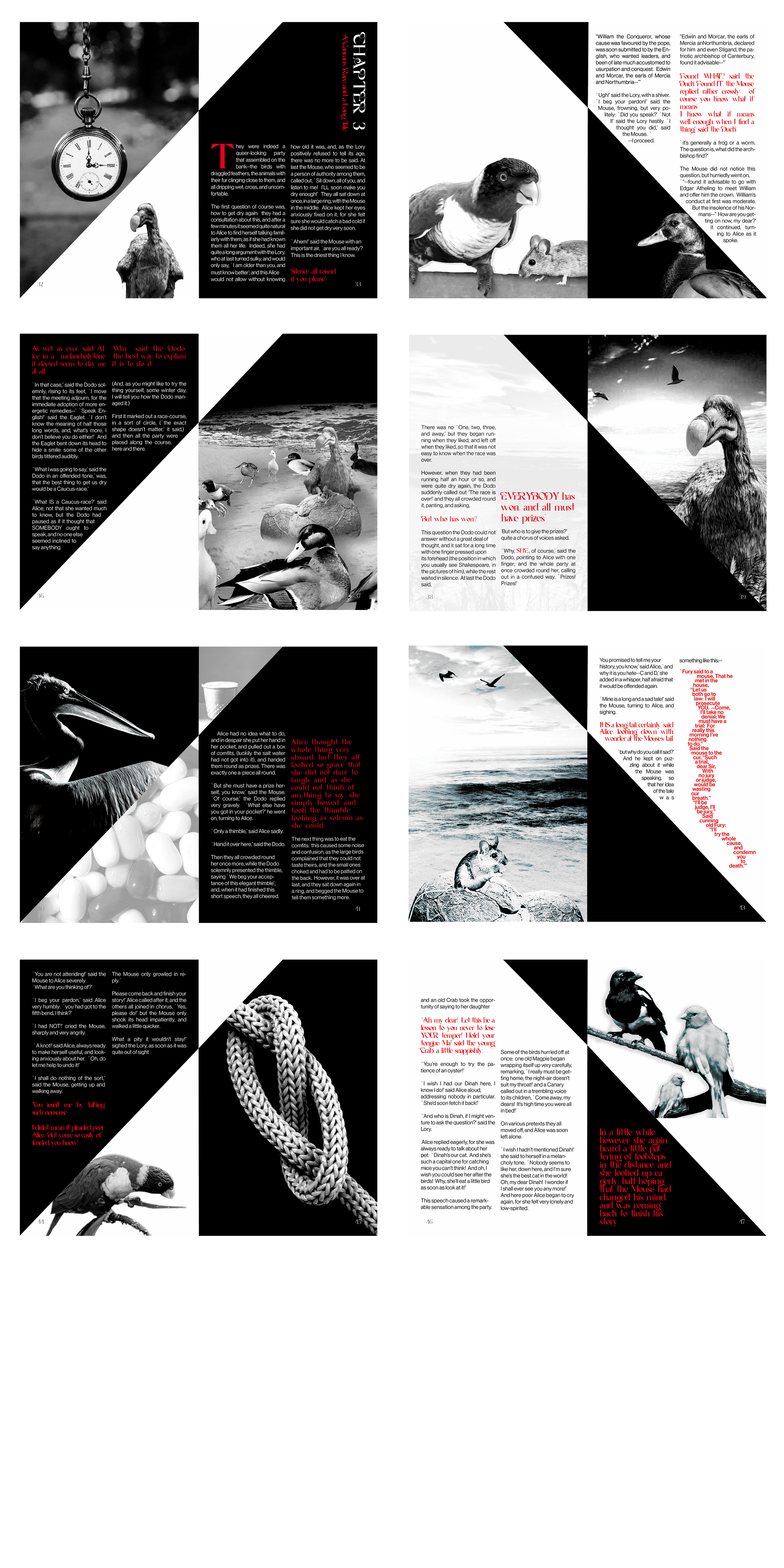
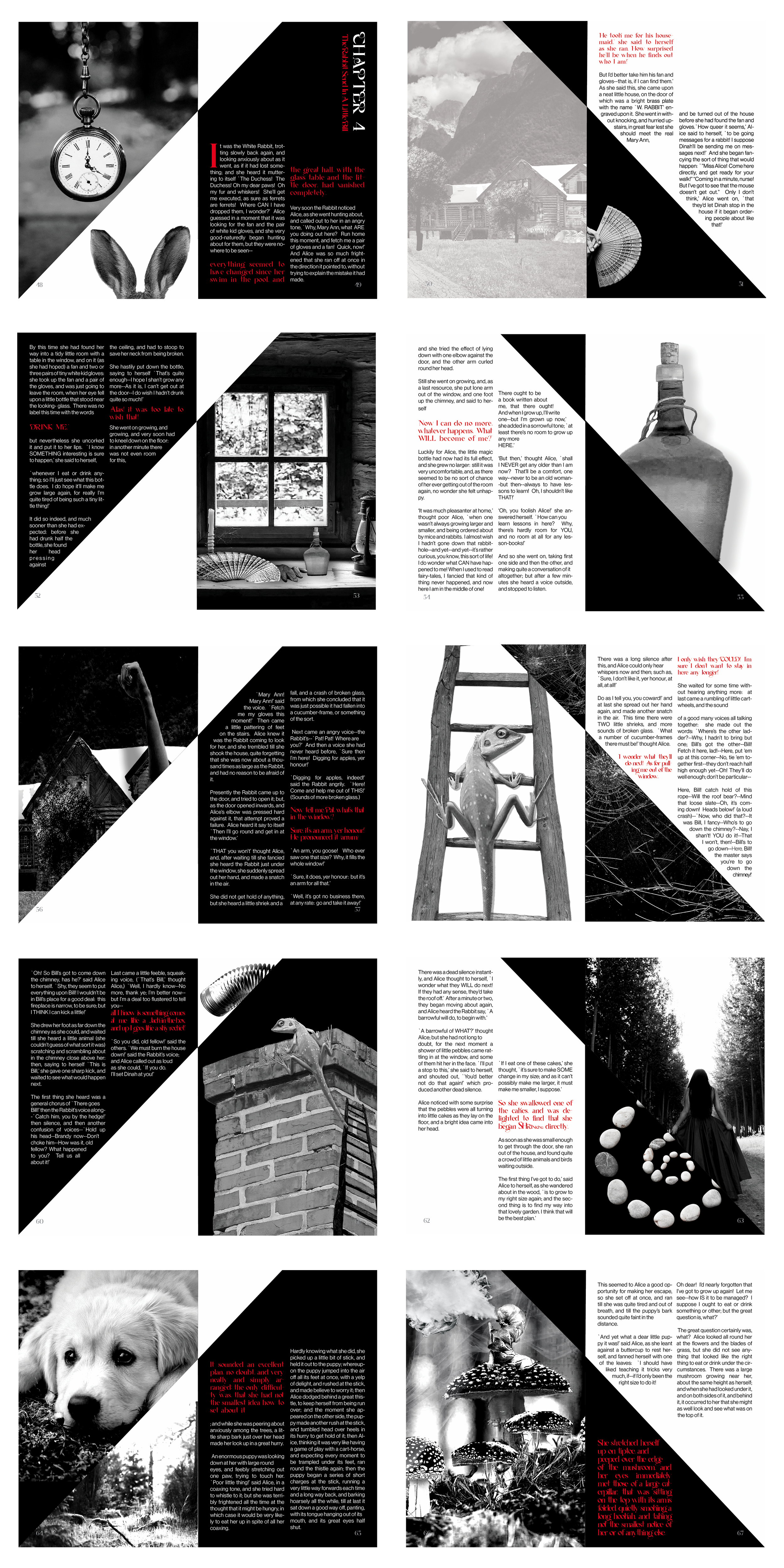
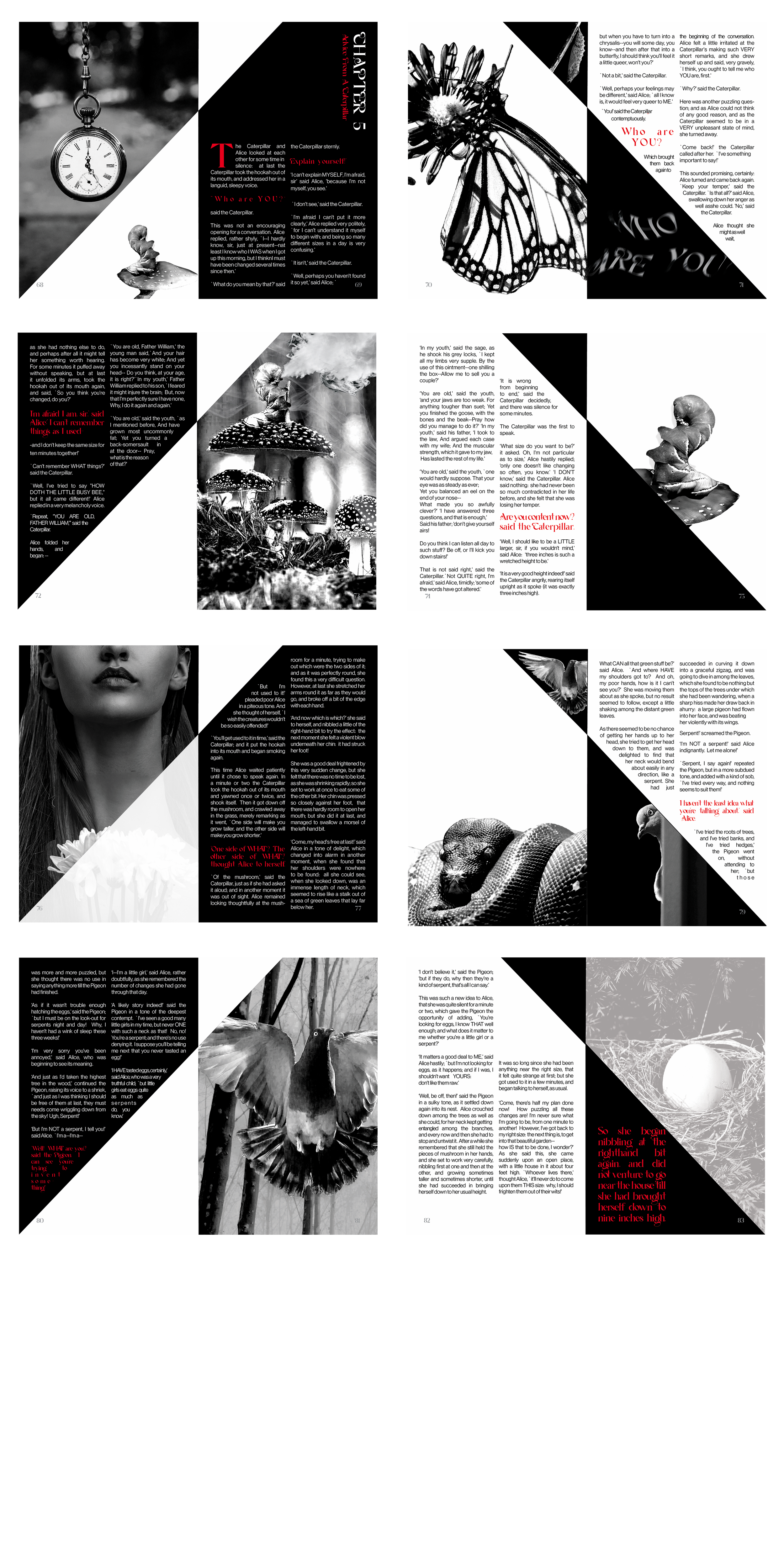
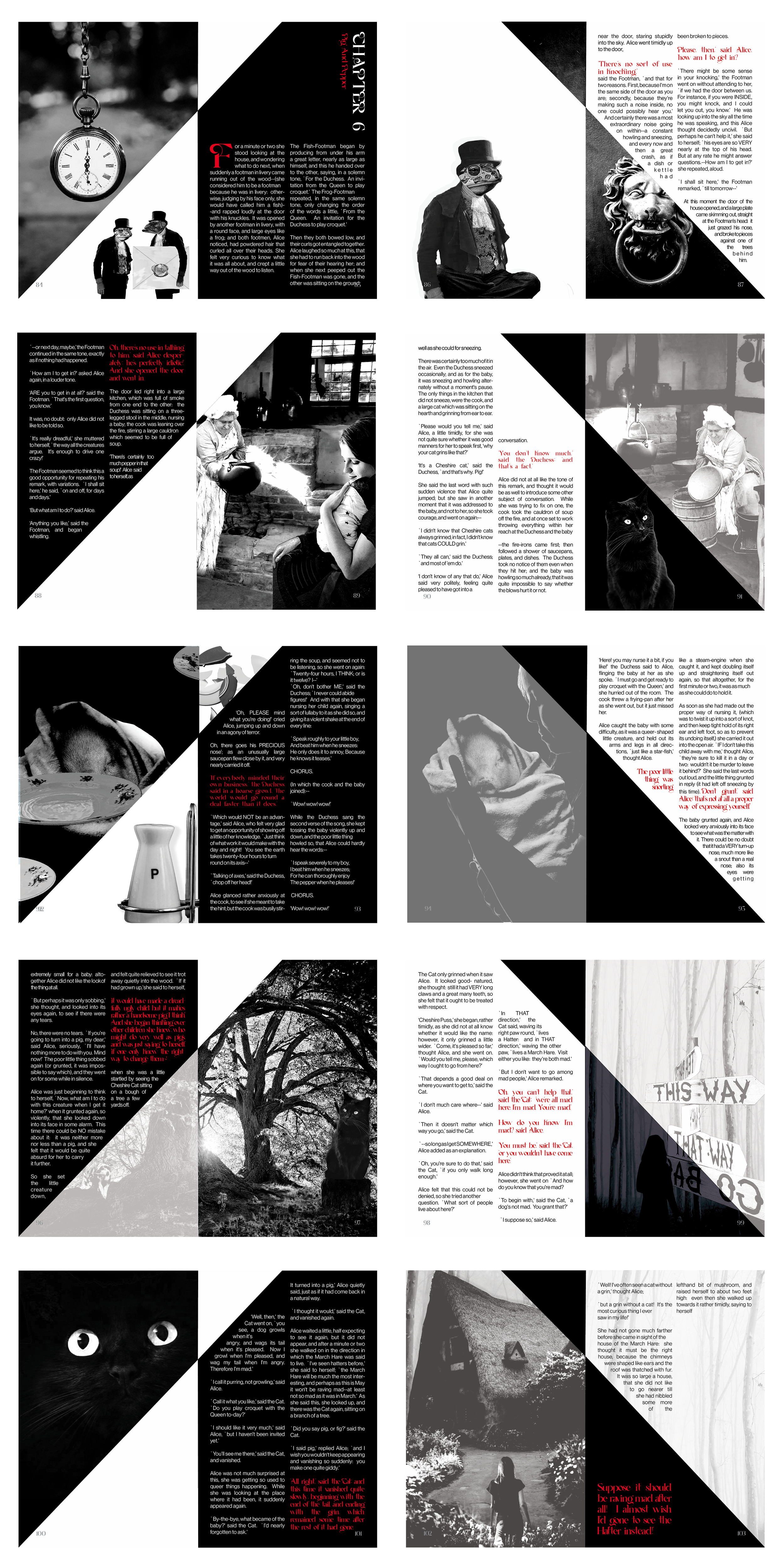
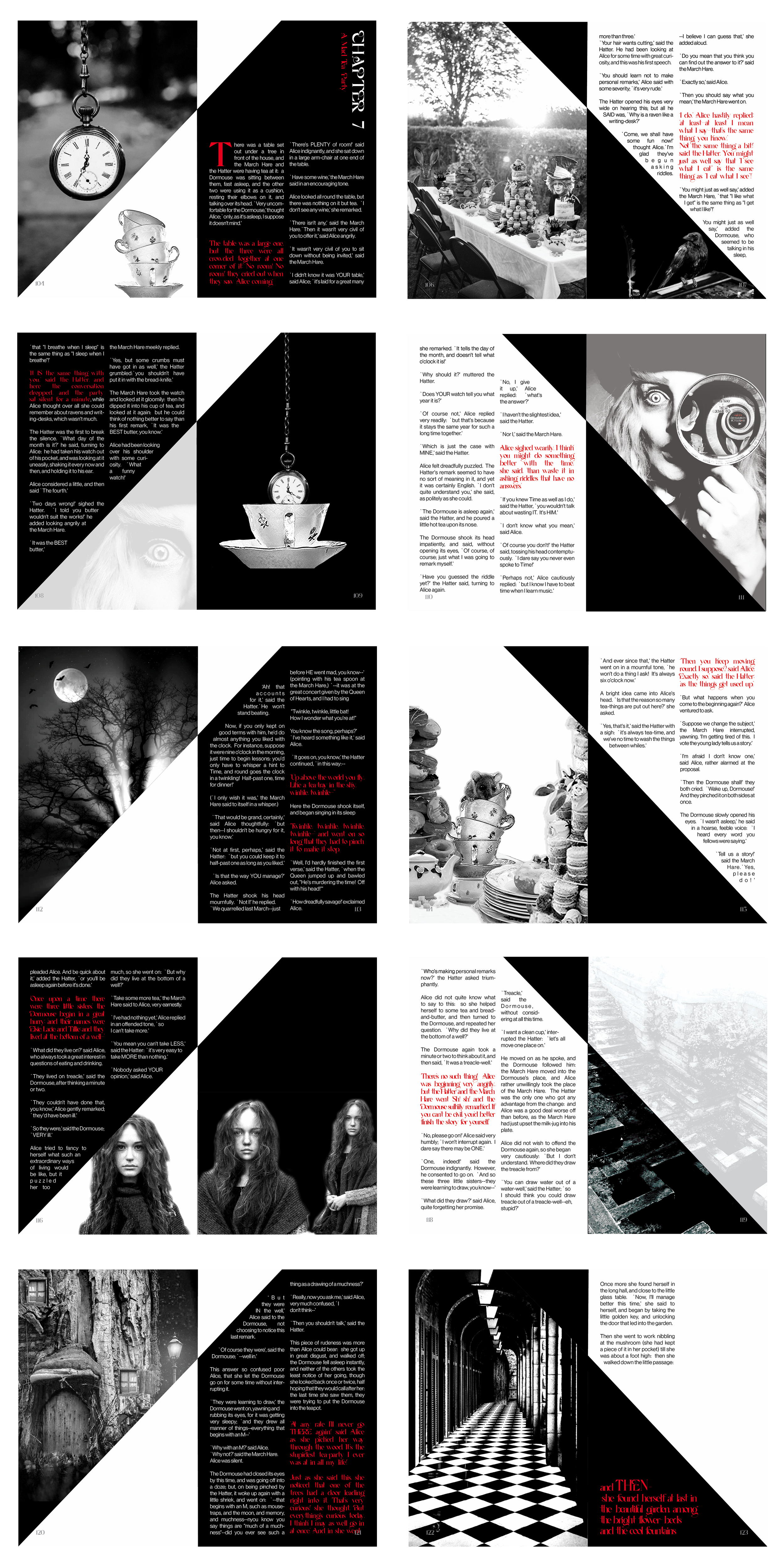
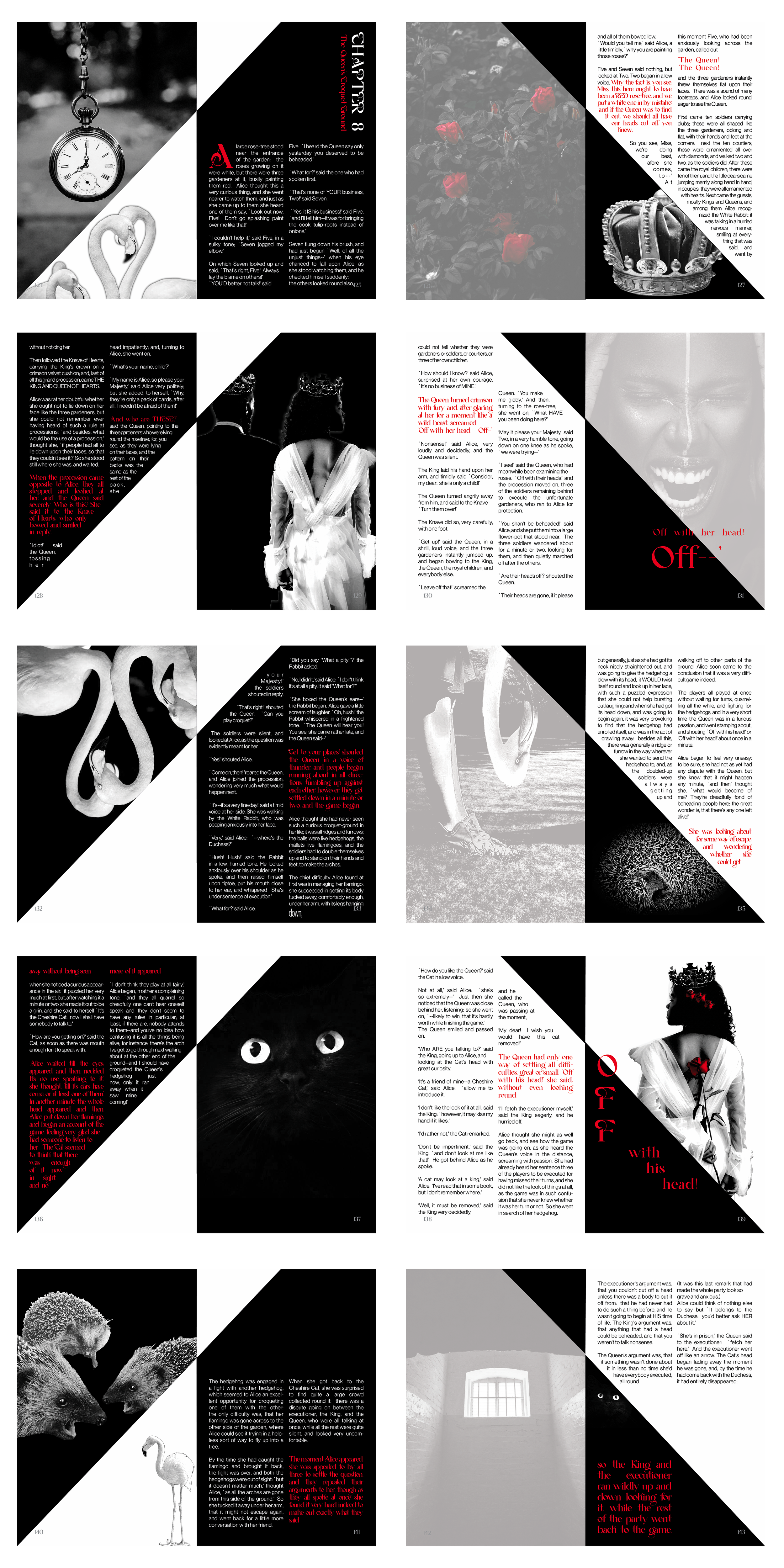
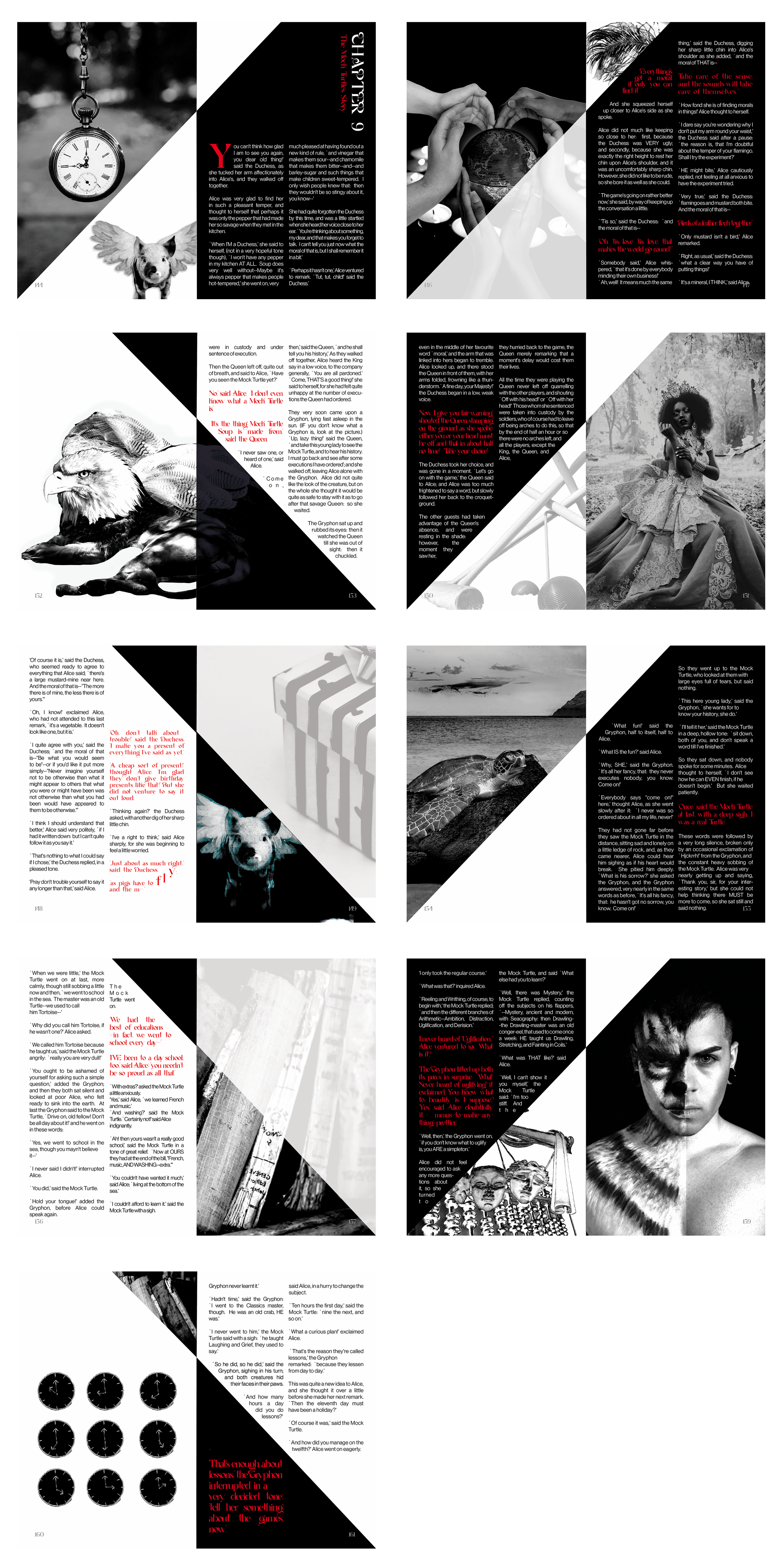
Additional Chapters (2-12)
Full book design developed beyond the limited edition first chapter. Subsequent spreads maintain the established visual system, showing consistency, hierarchy, and pacing across the entire publication.
-
![]()
CHAPTER 2
-
![]()
CHAPTER 3
-
![]()
CHAPTER 4
-
![]()
CHAPTER 5
-
![]()
CHAPTER 6
-
![]()
CHAPTER 7
-
![]()
CHAPTER 8
-
![]()
CHAPTER 9
-
![]()
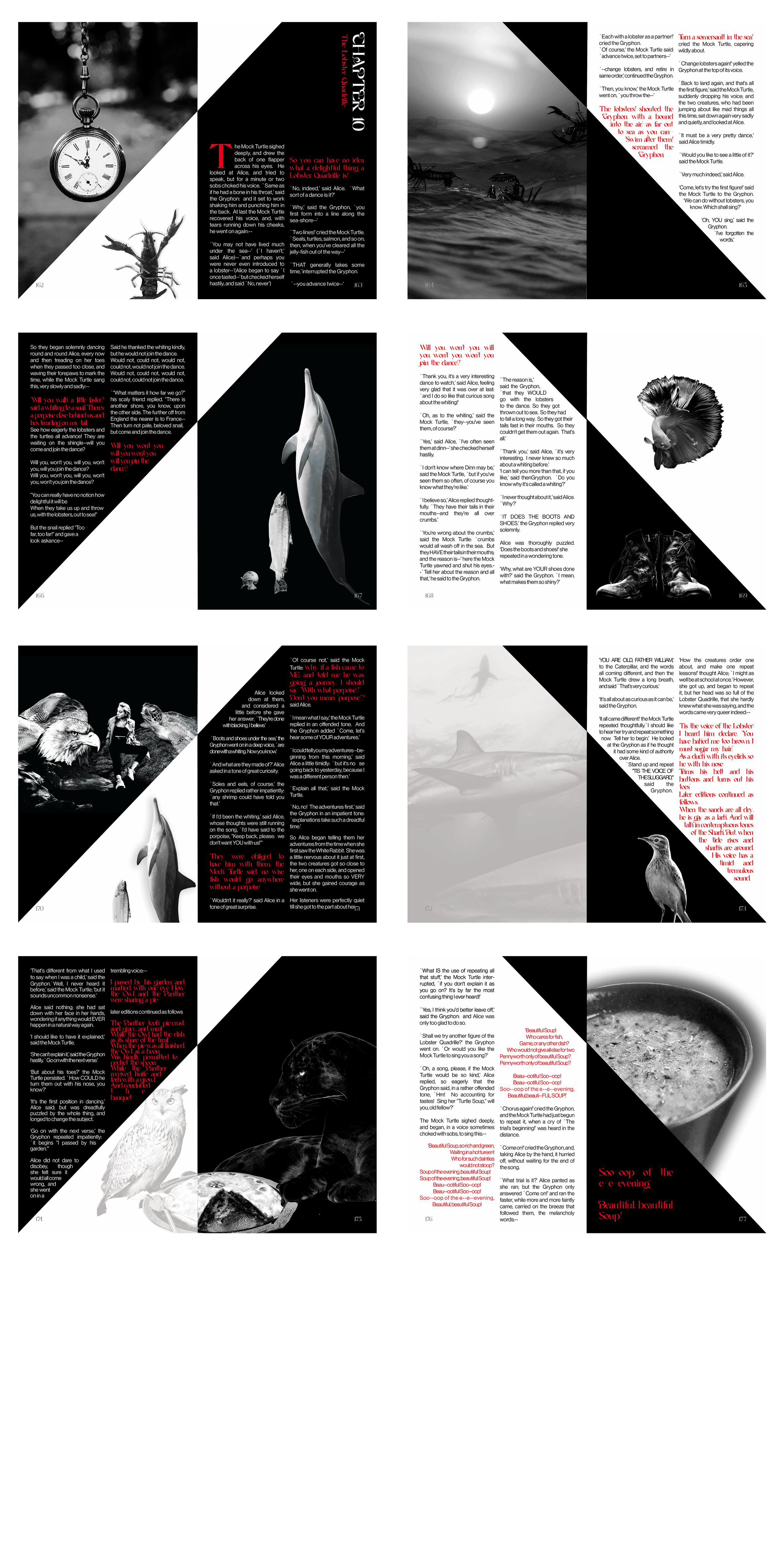
CHAPTER 10
-
![]()
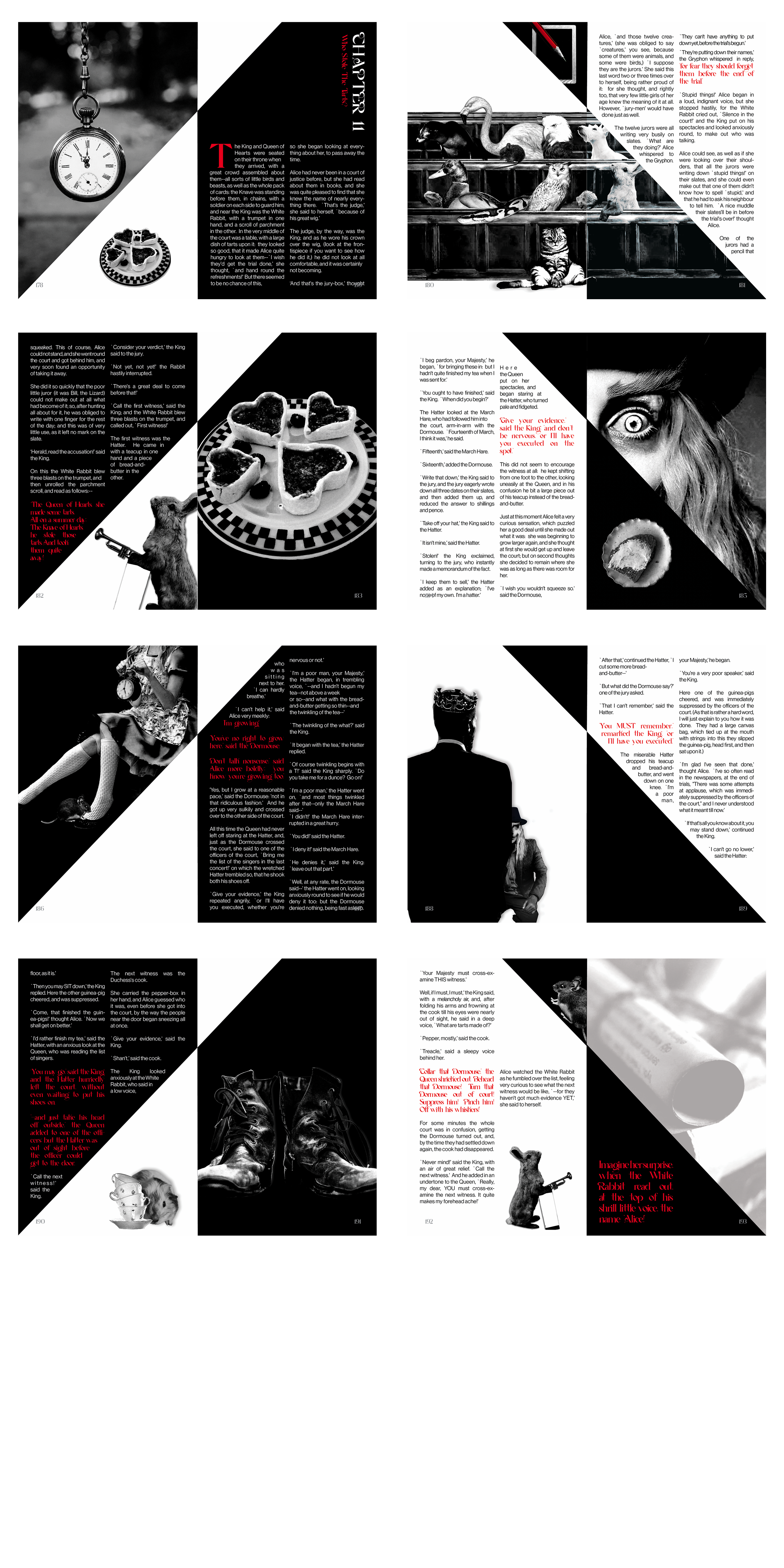
CHAPTER 11
-
![]()
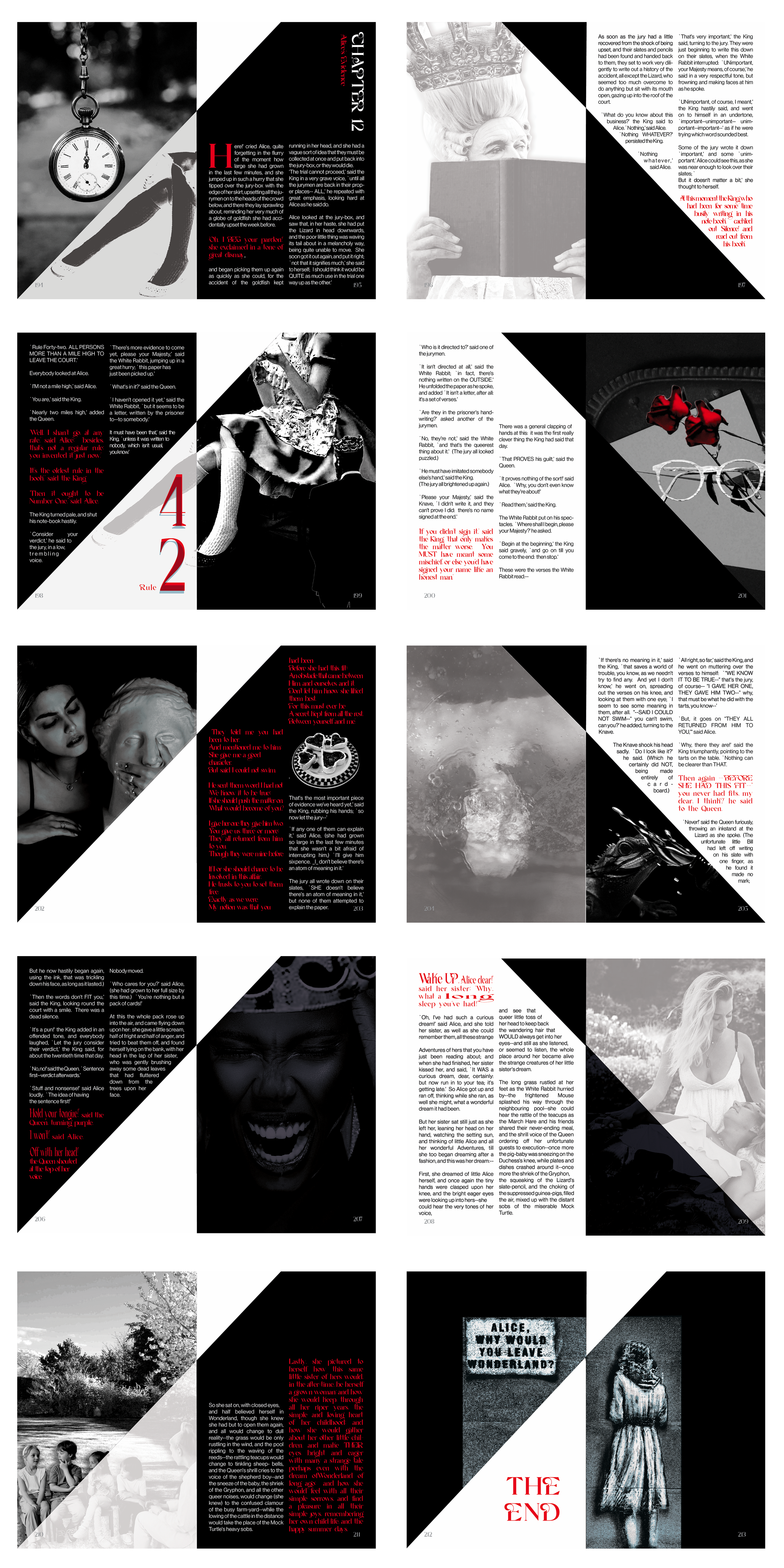
CHAPTER 12